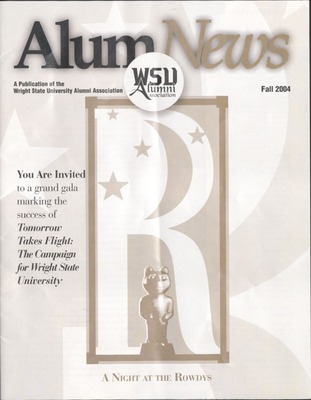
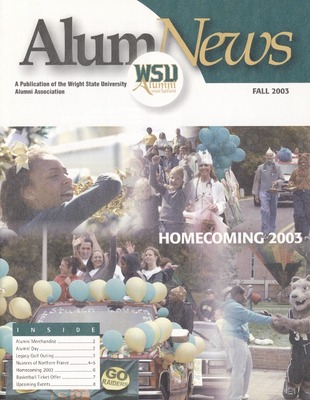
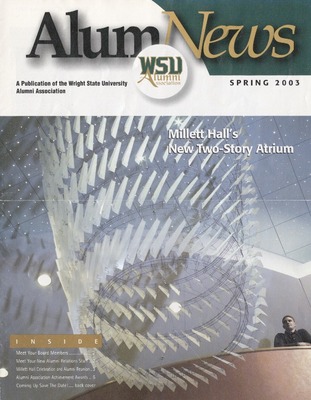
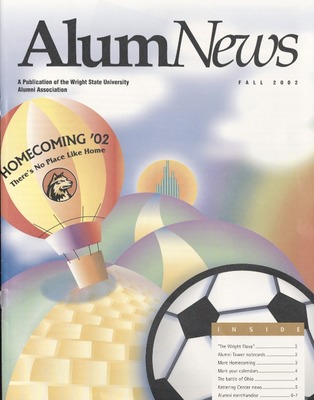
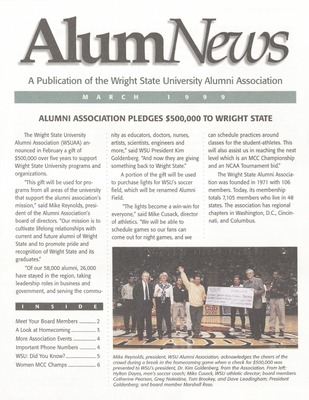
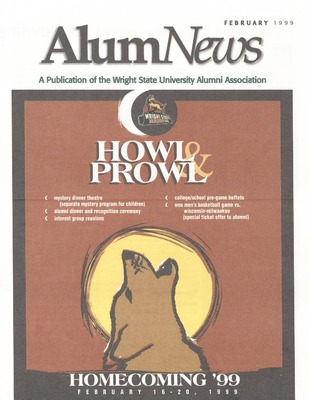
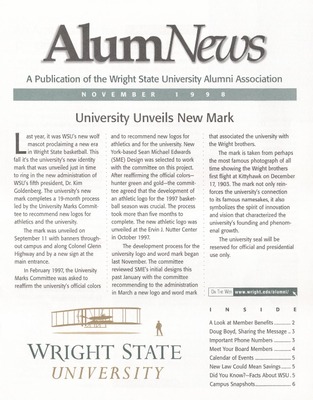
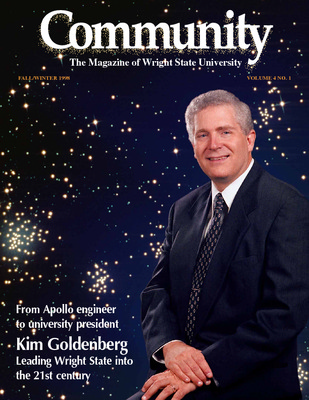
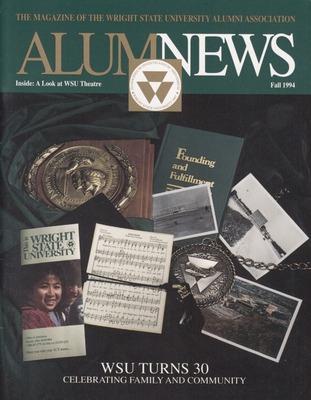
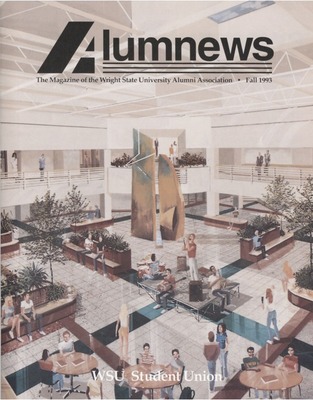
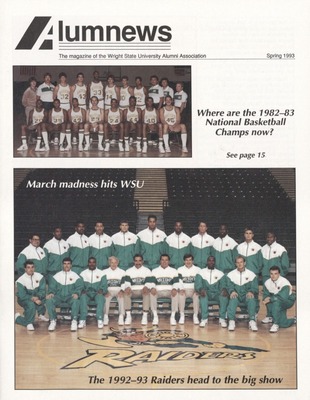
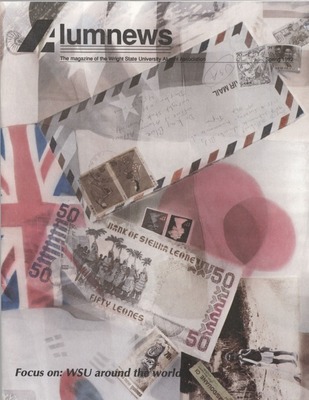
Collection of publications for faculty, staff, students, alumni and friends of the university.
This collection includes:
-

Wright State University Magazine, Fall 2023
Wright State Alumni Association and Wright State Foundation
Fifty-two page issue of the Wright State University Magazine. This magazine is published twice a year and focuses on news related to Wright State alumni, faculty, staff, and friends of the university.
-
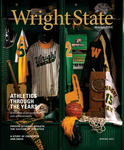
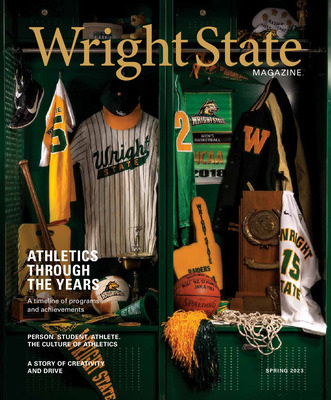
Wright State University Magazine, Spring 2023
Wright State Alumni Association and Wright State Foundation
Fifty-two page issue of the Wright State University Magazine. This magazine is published twice a year and focuses on news related to Wright State alumni, faculty, staff, and friends of the university.
-

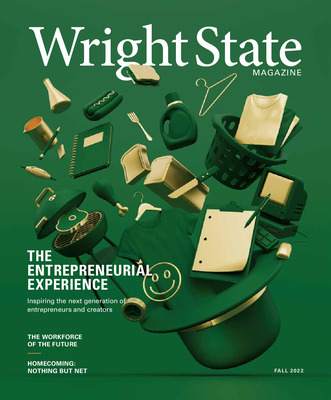
Wright State University Magazine, Fall 2022
Wright State Alumni Association and Wright State Foundation
52-page issue of the Wright State Magazine. This magazine is published twice a year and focuses on news related to Wright State alumni, faculty, and friends of the university.
-

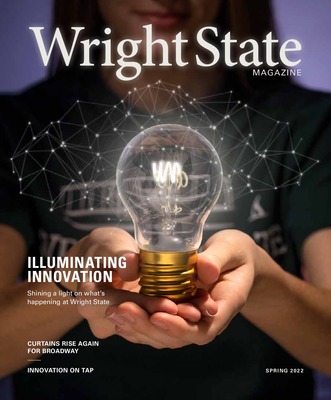
Wright State University Magazine, Spring 2022
Wright State Alumni Association and Wright State University Foundation
52-page issue of the Wright State Magazine. This magazine is published twice a year and focuses on news related to Wright State alumni, faculty, and friends of the university.
-

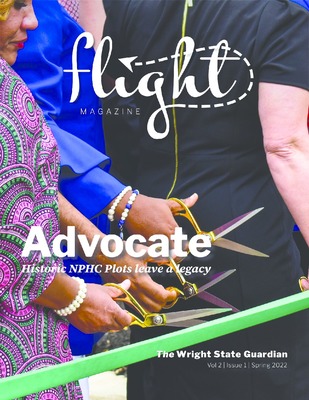
Flight Magazine, Spring 2022
Wright State Student Body
Flight Magazine is published by the Wright State Guardian Media Group and focuses on happenings in Dayton, the Miami Valley, and the world that effect the Wright State student body. Topics featured in this issue include the Gem City Market, the Historic NPHC Plots, and topics on community inspiration and leadership.
-

Wright State University Magazine, Fall 2021
Wright State Alumni Association and Wright State University Foundation
52-page issue of the Wright State Magazine. This magazine is published twice a year and focuses on news related to Wright State alumni, faculty, and friends of the university.
-

Wright State University Magazine, Spring 2021
Wright State Alumni Association and Wright State University Foundation
48-page issue of the Wright State Magazine. This magazine is published twice a year and focuses on news related to Wright State alumni, faculty, and friends of the university.
-

Flight Magazine, Spring 2021
Wright State Student Body
Flight Magazine is published by the Wright State Guardian Media Group and focuses on happenings in Dayton, the Miami Valley, and the world that effect the Wright State student body. Topics featured in this issue include the faculty strike, human trafficking, and COVID-19.
-

Wright State University Magazine, Spring 2020
Office of Marketing, Wright State University; Wright State Alumni Association; and Wright State University Foundation
48-page issue of the Wright State Magazine. This magazine is published twice a year and focuses on news related to Wright State alumni, faculty, and friends of the university.
-

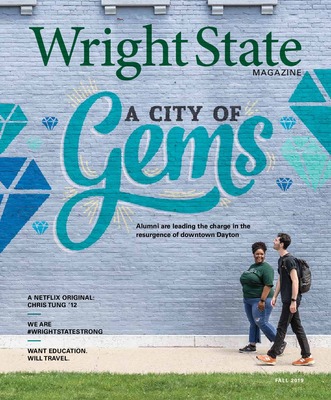
Wright State University Magazine, Fall 2019
Office of Marketing, Wright State University; Wright Sate Alumni Association; and Wright State University Foundation
48-page issue of the Wright State Magazine. This magazine is published twice a year and focuses on news related to Wright State alumni, faculty, and friends of the university.
-

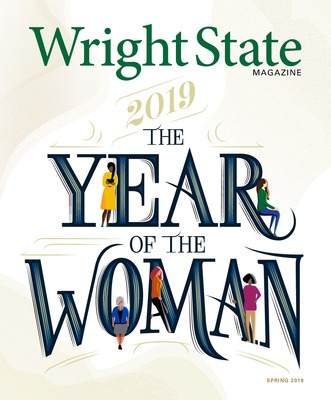
Wright State University Magazine, Spring 2019
Office of Marketing, Wright State University; Wright State Alumni Association; and Wright State University Foundation
56-page issue of the Wright State Magazine. This magazine is published twice a year and focuses on news related to Wright State alumni, faculty, and friends of the university.
-
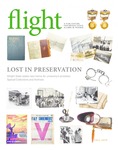
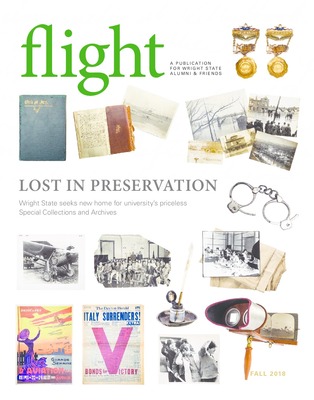
flight, Fall 2018
Office of Marketing, Wright State University; Wright State Alumni Association; and Wright State University Foundation
42-page issue of the Wright State Magazine. This special publication focused on news related to Wright State alumni, faculty, and friends of the university.
-

Wright State University Magazine, Fall 2017
Office of Marketing, Wright State University
Thirty-six page issue of the Wright State University Magazine. This magazine is published twice a year and focuses on news related to Wright State alumni, faculty, staff, and friends of the university.
-

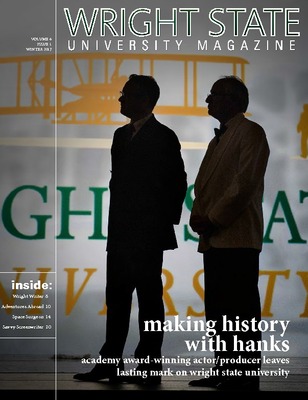
Wright State University Magazine, Winter 2017
Office of Marketing, Wright State University
Thirty-six page issue of the Wright State University Magazine. This magazine is published twice a year and focuses on news related to Wright State alumni, faculty, staff, and friends of the university.
-

Wright State University Magazine, Spring 2016
Office of Marketing, Wright State University
Thirty-six page issue of the Wright State University Magazine. This magazine is published twice a year and focuses on news related to Wright State alumni, faculty, staff, and friends of the university.
-

Wright State University Magazine, Fall 2015
Office of Marketing, Wright State University
Forty page issue of the Wright State University Magazine. This magazine is published twice a year and focuses on news related to Wright State alumni, faculty, staff, and friends of the university.
-
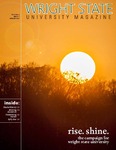
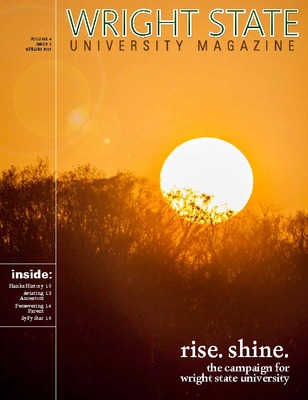
Wright State University Magazine, Spring 2015
Office of Marketing, Wright State University
Thirty-six page issue of the Wright State University Magazine. This magazine is published twice a year and focuses on news related to Wright State alumni, faculty, staff, and friends of the university.
-

Wright State University Magazine, Fall 2014
Office of Marketing, Wright State University
Thirty-eight page issue of the Wright State University Magazine. This magazine is published twice a year and focuses on news related to Wright State alumni, faculty, staff, and friends of the university.
-

Wright State University Magazine, Spring 2014
Office of Marketing, Wright State University
Thirty-six page issue of the Wright State University Magazine. This magazine is published twice a year and focuses on news related to Wright State alumni, faculty, staff, and friends of the university.
-
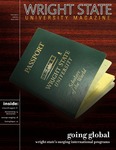
Wright State University Magazine, Fall 2013
Office of Communications and Marketing, Wright State University
Thirty-six page issue of the Wright State University Magazine. This magazine is published twice a year and focuses on news related to Wright State alumni, faculty, staff, and friends of the university.
-

Wright State University Magazine, Spring 2013
Office of Communications and Marketing, Wright State University
Thirty-six page issue of the Wright State University Magazine. This magazine is published twice a year and focuses on news related to Wright State alumni, faculty, staff, and friends of the university.
-

Wright State University Magazine, Fall 2012
Office of Communications and Marketing, Wright State University
Thirty-six page issue of the Wright State University Magazine. This magazine is published twice a year and focuses on news related to Wright State alumni, faculty, staff, and friends of the university.
-

Wright State University Magazine, Spring 2012
Office of Communications and Marketing, Wright State University
Nineteen page issue of the Wright State University Magazine. This magazine is published twice a year and focuses on news related to Wright State alumni, faculty, staff, and friends of the university.
-

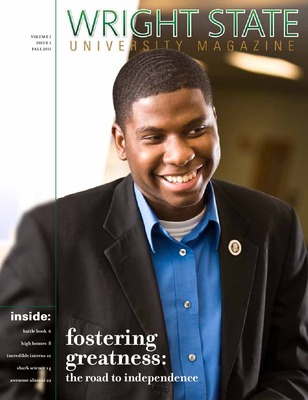
Wright State University Magazine, Fall 2011
Office of Communications and Marketing, Wright State University
Thirty-six page issue of the Wright State University Magazine. This magazine is published twice a year and focuses on news related to Wright State alumni, faculty, staff, and friends of the university.
-

Community, Spring 2011
Office of Communications and Marketing, Wright State University
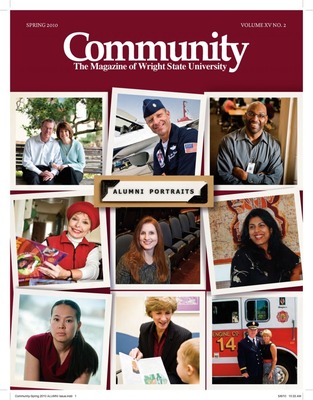
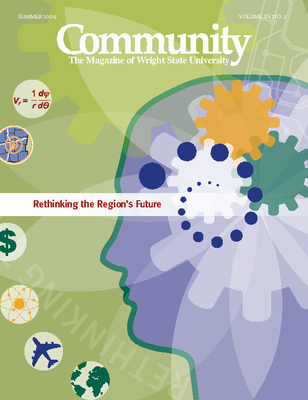
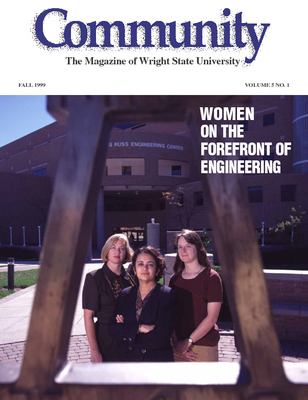
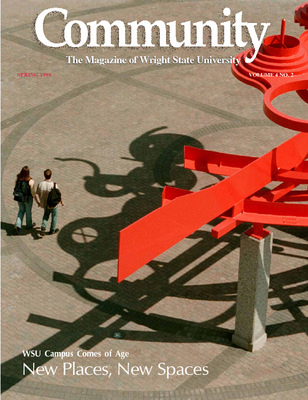
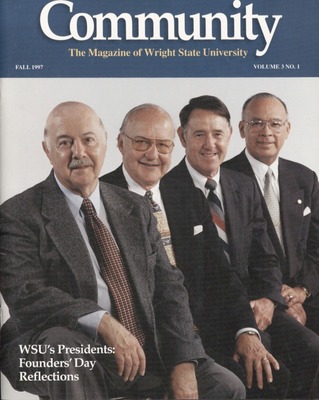
Thirty-six page issue of Community which was published periodically from 1996 through 2011. The magazine focused on news and events at Wright State University relating to faculty, staff, alumni, and friends of the university.