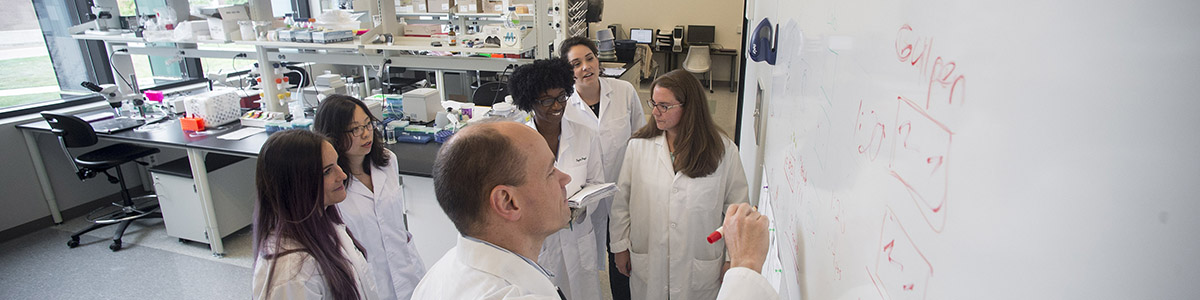

Featuring realistic mockups of disaster situations, the National Center for Medical Readiness will offer a real-world training and research environment.
The parking garage of a high-rise building collapses. Thousands of gallons of water flood local streets. Miners become trapped in underground tunnels.
Such real-life disaster scenarios will be an everyday occurrence when the National Center for Medical Readiness (NCMR) at Calamityville offers its first training courses in 2010. The NCMR will transform nearly 60 acres of land in Fairborn, Ohio—on the site of the former CEMEX concrete plant—into a one-of-a-kind training facility for medical, public health, public safety, and civilian and military disaster-response decision makers from around the world.
(937) 673-5605
mark.gebhart@wright.edu
http://www.medicalreadiness.org/
“There are about a half-dozen other disaster-training sites in the United States, but none of them have medicine as their central core component,” explained NCMR Director Mark Gebhart, who is also an associate professor of emergency medicine at Wright State’s Boonshoft School of Medicine. “This will be unique—the first of its kind.”
For Glenn Hamilton, professor of emergency medicine at the Boonshoft School of Medicine, the tragedies of September 11 and Hurricane Katrina raised the question of how the nation’s health care system could become better prepared for terrorist attacks or natural disasters. “Homeland security doesn’t fully exist without security in the health care system,” said Hamilton. “Physicians and nurses are not really prepared in disaster readiness.”
Hamilton will serve as director of the NCMR Tactical Laboratory. The training provided in the Tactical Laboratory will feature realistic mockups of disaster situations, including confined spaces, submersion, elevated platforms, wilderness, rubble piles, transportation mishaps, and a field simulation hospital. The site’s existing facilities, with silos and thousands of feet of underground tunnels, offer a real-world training and research environment.
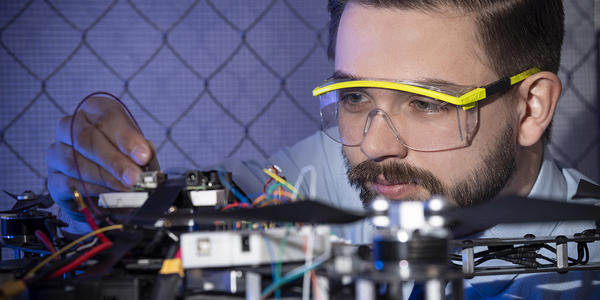
The tactical laboratory can also serve as a test bed for new products or research. For example, a micro air vehicle could be tested in the tunnels to see how it would work in urban spaces or confined areas to locate survivors.
Learn how medical student Heidi Abraham trains local officials and other medical students to respond to disasters.Read Heidi Abraham’s Profile →
The NCMR will also offer a Modular Emergency Medical System (MEMS). A collaboration with the Ohio Department of Health, the MEMS program will develop and maintain a statewide network of mobile Acute Care Centers (ACC) and Neighborhood Emergency Help Centers (NEHC). The ACCs and NEHCs can provide support to hospitals, primary care offices, and other health care systems during large-scale emergencies, such as a natural disaster or terrorist attack.
Each NEHC can provide triage services and basic medical treatment for up to 1,000 patients per day, freeing hospitals to focus on more serious conditions rather than case management or non-critical care. Each ACC can provide inpatient care for up to 250 people simultaneously, including hydration, bronchial therapy, and antibiotics. Both types of centers are designed for rapid deployment and self-sufficiency, enabling them to reach emergency sites quickly and provide vital care during the critical first 72 hours following an incident.
A community partnership that will transform the region
The NCMR is the result of a community partnership with the City of Fairborn, government officials, and area business and military leaders. CEMEX donated its facility and the surrounding 54-acre property, and the Ohio Department of Development has granted $2.8 million to clean up the brownfield site. Wright State University will provide $900,000 in matching funds. To date, more than $13 million in state and federal support has been received for the project.
“The Fairborn community values and is proud to support Wright State University and the National Center for Medical Readiness Tactical Laboratory at Calamityville,” said Gary Woodward, former mayor of Fairborn. “Our community will gain substantial benefits now and in the future through this effort, including cleanup and revitalization of an abandoned brownfield site in the city, the addition of future new jobs for the area, the beginning of a new leading-edge homeland security training facility in our region, and the multiplier effect of the need for more goods and services to support this major effort in Fairborn.”
Wright State anticipates the initial site cleanup will be completed in early 2010, after which it can begin focusing on renovating and building the first phase of the tactical laboratory. The first courses should be offered at the new site in 2010. Phase II will include additional props and a water feature, and Phase III will add a state-of-the-art hospital/student center. Phases II and III will begin once funding is in place.
Once it is fully functioning, the NCMR is expected to generate a direct and indirect economic impact of $374 million to the Dayton region over a five-year period. Training courses alone are estimated to bring in more than $4.3 million annually. As a test-bed for commercial product research and development, the laboratory could produce additional revenues of more than $2 million annually. Approximately 35 new jobs will be created, with construction resulting in another 344 jobs. In addition, the tactical laboratory will increase tourism and overnight stays in the region, increase sales and income tax revenues, and provide opportunities for the establishment and expansion of local business ventures.
But one of the greatest benefits of the National Center for Medical Readiness at Calamityville cannot be measured in dollars and cents. “As a physician, you want to be able to do good for people,” said Gebhart. “With a project like this, you can touch so many lives.”
National Center for Medical Readiness (NCMR) Video
Director Mark Gebhart discusses how the National Center for Medical Readiness will serve as a one-of-a-kind training facility for medical, public health, public safety, and civilian and military disaster-response decision makers from around the world.