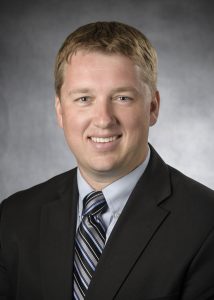
Ryan Mast is assistant professor of psychiatry at the Wright State Boonshoft School of Medicine.
Ryan Mast, D.O., a child and adolescent psychiatrist and assistant professor of psychiatry at the Wright State University Boonshoft School of Medicine, talked to the Dayton Daily News about calls by U.S. Surgeon General Vivek Murthy to place warning labels on social media sites.
Social media can be a trigger for dopamine, a neurotransmitter in the brain, often being labeled as “the reward” neurotransmitter, although other neurotransmitters also play a part in that feeling, according to Mast.
Neurotransmitters are chemical transmitters, allowing cells to communicate throughout the body and nervous system, according to the Cleveland Clinic, and dopamine can release a feeling of pleasure or satisfaction.“The brain is wired to reward behavior that is good for the body (like exercise), so that the reward causes us to want to repeat that activity (exercise again). One of the dangers of illicit substances is that some of them can increase dopamine artificially in the brain leading a person to want to repeat that potentially dangerous activity,” Mast said.
Read the complete article at daytondailynews.com.
 Wright State University announces sold out game for Stars, Stripes and Flight Classic featuring Air Force Falcons
  Wright State’s Family Weekend brings Raider families together
  International scholars
  A fresh start leads to finding his people
  Wright State alumna and faculty member Amy Faust receives Emerging Cinematographer Award