From inspiring students in the classroom to advancing research and strengthening the university through service and innovation, Wright State faculty make a difference every day.
Nine faculty members will be honored with the 2026 President’s Awards for Excellence, recognizing sustained excellence in teaching, research, professional service and community engagement.
The ceremony will be held on Wednesday, Sept. 23, at 3 p.m. in the Student Union Apollo Room. Staff President’s Awards for Excellence recipients — profiled separately — and 2026 Service Awards recipients will also be honored during the ceremony.
Trustees’ Award for Faculty Excellence
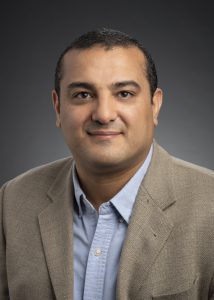
Sherif Elbasiouny
Sherif Elbasiouny, Ph.D.
Wright State University and Premier Health Endowed Chair in Neurodegenerative Diseases Research
Director, Neuroengineering Education and Research
Professor, Neuroscience, Cell Biology and Physiology
College of Science and Mathematics
Boonshoft School of Medicine
College of Engineering and Computer Science
Sherif Elbasiouny has spent his career pursuing one of neuroscience’s most difficult questions: why motor neurons that control movement become dysfunctional and degenerate in diseases such as amyotrophic lateral sclerosis (ALS).
Elbasiouny leads a multidisciplinary neuroengineering laboratory studying movement problems caused by aging, neurodegenerative disease and nervous system injury, including neuroprosthetic approaches to restore movement. His research bridges engineering, neuroscience and clinical science, aiming to develop noninvasive biomarkers that could diagnose ALS earlier and track its progression.
The lab has established Wright State as an important contributor to motor neuron and neurodegenerative disease research, while training numerous undergraduate and graduate students, postdoctoral fellows and staff.
Since 2012, Elbasiouny has secured more than $16 million in external funding from agencies including the National Institutes of Health, DARPA and the Air Force Research Laboratory, supporting research from fundamental motor neuron biology to translational work aimed at detecting neurological diseases.
“Dr. Elbasiouny has built a nationally recognized and exceptionally well-funded research program, developed innovative interdisciplinary educational programs and mentored a large and successful cohort of students and trainees,” said Eric Bennett, Ph.D., chair of neuroscience, cell biology and physiology.
University Professor
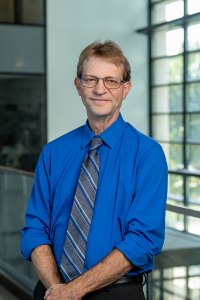
Thomas Brown
Thomas Brown, Ph.D.
Professor and Associate Chair for Research, Department of Neuroscience, Cell Biology and Physiology; College of Science and Mathematics
Professor, Obstetrics and Gynecology; Boonshoft School of Medicine
Severe early-onset preeclampsia is one of the most dangerous complications in pregnancy and one of the least understood. Thomas Brown has built his career trying to change that, working to protect expectant mothers and their babies from a condition that remains one of reproductive medicine’s central challenges.
Brown’s lab takes a uniquely focused approach, isolating this specific patient population and studying the biology of the placenta in close partnership with clinicians to uncover what causes the condition and develop safe ways to treat it.
An internationally recognized investigator, Brown has built one of the most sustained and impactful records of scholarship, teaching and service at Wright State, fostering interdisciplinary research collaborations spanning basic science and clinical medicine.
“Over more than 25 years at Wright State, Dr. Brown has built a distinguished career defined by sustained NIH-funded research, exceptional mentorship and a remarkable ability to collaborate across disciplines,” said Raj Mitra, M.D., dean of the Boonshoft School of Medicine. “He is widely regarded as one of the university’s most accomplished and broadly influential faculty members.”
Brage Golding Distinguished Professor of Research
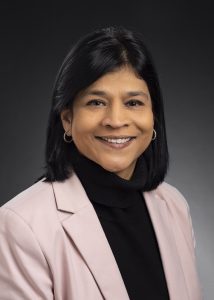
Madhavi Kadakia
Madhavi Kadakia, Ph.D.
Professor, Biochemistry and Molecular Biology
Boonshoft School of Medicine
Madhavi Kadakia’s research has helped explain how cancer develops — and why some tumors stop responding to treatment. Her work spans cancer biology, molecular signaling and translational research, revealing insights into what fuels cancer’s growth and identifying molecular targets that could one day restore drug sensitivity and improve patient outcomes.
Over more than two decades at Wright State, she has built an internationally respected, continuously funded research program. What distinguishes her most is how she combines research excellence with a commitment to developing others. Her laboratory produces not just significant science, but future leaders in biomedical science.
During her time as vice provost for research and innovation, she positioned Wright State for continued growth by modernizing research infrastructure, expanding partnerships with federal agencies including the Air Force Research Laboratory and enhancing competitiveness for external funding.
“Dr. Kadakia represents the very best of Wright State — an accomplished scientist, a dedicated mentor and a collaborative leader,” said Raj Mitra, M.D., dean of the Boonshoft School of Medicine.
Frederick A. White Distinguished Professor of Professional Service
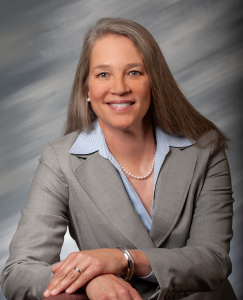
Dawn Wooley
Dawn Wooley, Ph.D.
Professor, Neuroscience, Cell Biology and Physiology
College of Science and Mathematics
From shaping university policy to advancing national scientific initiatives, Dawn Wooley has dedicated her career to making a lasting impact.
She served as faculty vice president and faculty president after eight years as an elected faculty senator, including seven years on the Faculty Senate Executive Committee. During that time, she served on eight standing committees and chaired six, helping shape university policy and priorities.
Wooley assumed the role of director of the microbiology and immunology graduate program without additional compensation or teaching release, demonstrating her commitment to the university and its students. In this role, she has helped expand the program through sustained recruitment, curriculum stewardship and mentorship.
Her commitment and leadership extend nationally through her participation on advisory groups for the Centers for Disease Control and Prevention and National Institutes of Health, helping develop gene therapy technologies and shape biosafety policy and public health preparedness.
“Dr. Wooley’s record reflects an unusual breadth and depth of professional service,” said Eric Bennett, Ph.D., chair of neuroscience, cell biology and physiology. “She clearly exemplifies the standard of leadership and institutional impact that this honor recognizes.”
Robert J. Kegerreis Distinguished Professor of Teaching
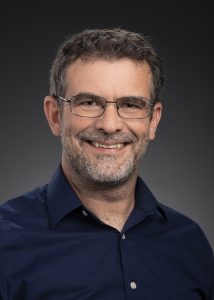
Jeffrey Peters
Jeffrey Peters, Ph.D.
Professor and Interim Chair, Biological Sciences
College of Science and Mathematics
Jeffrey Peters has made student success a defining part of his work at Wright State, both inside and beyond the classroom.
Through his own initiative and commitment to improving student success rates, Peters uses data to identify opportunities for improvement, not only in his classroom but also across the Department of Biological Sciences. As chair of the department’s Undergraduate Curriculum Committee, he developed first-year seminars for biology majors and continually revises the introductory courses to meet students’ changing needs, all in an effort to improve the program’s retention rates.
Peters also brings his internationally recognized research in population genetics into the classroom, giving students firsthand insight into how scientific knowledge is developed. His commitment to experiential learning extends through undergraduate and graduate research mentoring, local field experiences and study abroad opportunities.
“Several students have shared that Dr. Peters is their favorite professor, not only because he presents his course material in a clear and interesting way, but because they can feel that he cares about them as individuals and is invested in their success,” said Lynn Hartzler, Ph.D., interim dean of the College of Science and Mathematics.
Presidential Award for Faculty Excellence: Early Career Achievement Award
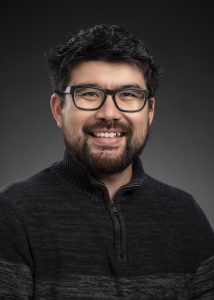
Cogan Shimizu
Cogan Shimizu, Ph.D.
Associate Professor, Computer Science
College of Engineering and Computer Science
Cogan Shimizu ’16, ’17 wants rural Ohio classrooms to have opportunities to master AI literacy — and he’s leading a $2.5 million federal grant to make it happen, designing curriculum and training educators from high school through college.
It’s the kind of project that’s defined his career since joining the Wright State faculty in 2022.
Shimizu has built a highly productive, self-sustaining academic program in neurosymbolic artificial intelligence, writing more than 70 publications and securing more than $5.3 million in funding from the National Science Foundation, NASA and the Department of Education.
His lab supports 23 undergraduate and graduate students in a collaborative, student-centered research culture, and his teaching incorporates research directly in the classroom, creating engaging and challenging learning experiences.
“Cogan is a superstar, balancing successful teaching and research in a field where the pace of change is tremendous,” said interim Dean Timothy J. Bunning, Ph.D. “He is a model faculty member for the 21st century with respect to higher education.”
Presidential Award for Outstanding Non-Tenure Eligible Faculty: Service
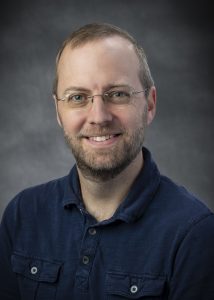
Chad Campbell
Chad Campbell, Ph.D.
Senior Lecturer, Biochemistry and Molecular Biology
College of Science and Mathematics
Few faculty members have played such a central role in the development and growth of a program as Chad Campbell.
Since helping to create the undergraduate biochemistry and molecular biology program in 2014, Campbell has led the program’s course and curriculum development, building it into one of the largest majors in the College of Science and Mathematics and a program accredited by the American Society for Biochemistry and Molecular Biology.
As program director and advisor, Campbell provides academic and career guidance to more than 75 students each year while also leading and serving on numerous departmental curriculum and honors committees. His service carries across the college, where he has chaired the College of Science and Mathematics Steering Committee and contributed to university initiatives focused on improving student success and strengthening science education.
He is deeply engaged in student-focused activities beyond the classroom, regularly participating in events that celebrate students’ achievements.
“It is uncommon to encounter a non-tenure-eligible faculty member whose service portfolio reflects this level of leadership, responsibility and institutional impact,” said Eric Bennett, Ph.D., interim chair of biochemistry and molecular biology.
Presidential Award for Outstanding Non-Tenure Eligible Faculty: Teaching
Nick Ritucci, Ph.D.
Senior Lecturer, Neuroscience, Cell Biology and Physiology
College of Science and Mathematics
Anatomy and physiology are gateway courses for nearly every health program at Wright State, and gateways only work if students can get through them. Nick Ritucci recognized that too many students were struggling with these demanding courses, so he worked with colleagues to redesign them, adding new opportunities for students to engage with and master the material, without a reduction in academic expectations.
The redesign has had a transformative effect. Ritucci has spent nearly two decades helping thousands of students prepare for careers in nursing, medicine and other health fields, making him one of the most influential educators in Wright State’s biomedical curriculum.
Deeply invested in student mentorship and academic support, his commitment to teaching excellence extends well beyond the classroom.
“Dr. Ritucci is among the most impactful and effective educators I have encountered in my career,” said Eric Bennett, Ph.D., chair of neuroscience, cell biology and physiology.
Presidential Award for Faculty Excellence in Community Engagement
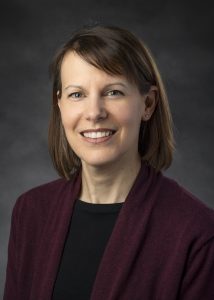
Michelle Fleming
Michelle Fleming, Ph.D.
Associate Professor, Teacher Education
College of Health, Education and Human Services
Michelle Fleming has spent more than a decade cultivating relationships that help shape the next generation of educators.
Since joining Wright State, Fleming has developed a sustained network of partnerships with school districts, park systems and community organizations across the Miami Valley and beyond. Through field-based teaching, outdoor and place-based learning, she creates authentic opportunities for teacher candidates while providing support for local schools.
A hallmark of Fleming’s work is her commitment to science education and learning beyond the traditional classroom. A member of the National Science Teaching Association and the Science Education Council of Ohio, Fleming is also involved with Wright State’s Chile Education Program, where she fosters connections across cultures.
Fleming multiplies her impact through mentorship that many students have described as “transformative.” Over the past three years alone, she has advised and mentored more than 50 students in research projects, conference presentations and professional recognition opportunities, developing relationships that last long after graduation.
“Through her dedication, leadership and collaborative spirit, Dr. Fleming has greatly advanced Wright State University in its mission of transforming the communities we serve,” said Colleen Saxen, Ed.D., chair of the School of Education and Leadership.
 Wright State University honors faculty for excellence in teaching, research, professional service and community engagement
  Coming in to her own
  Wright State University celebrates two decades of Air Force Marathon partnership
  Flying high
  Greene County families visit Wright State for mass food distribution by The Foodbank