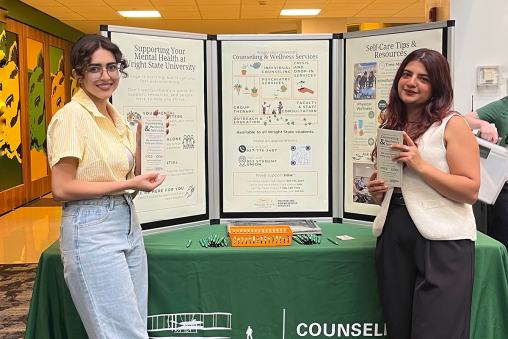
The SPARK program at Wright State uses peer-to-peer education to make conversations about wellness more approachable for students. (Photos by Wright State University Counseling and Wellness Services)
Wright State University students are taking an active role in supporting the health and well-being of their peers through a new initiative designed to make conversations about wellness more approachable.
Counseling and Wellness Services launched the Students Providing Advocacy, Resources and Knowledge (SPARK) Peer Education Program in January, creating a team of students who educate, advocate and connect fellow Raiders with campus resources to promote mental health, healthy lifestyles and overall well-being.
“Our goal is that students won’t be afraid to ask for help, that they feel empowered to make decisions to benefit the well-being of themselves and their community, and that the peer educators serve as that bridge to provide connection and education, particularly to those who may not seek formal services,” said Sara Baker, health and wellness program manager for Counseling and Wellness Services.
The SPARK program was developed in response to growing concerns about student well-being on college campuses nationwide. According to Wright State’s 2023 Healthy Minds Study, 38% of student respondents reported moderate to severe symptoms of depression, 32% reported moderate to severe symptoms of anxiety, and nearly two-thirds said they felt isolated, left out or lacking companionship.
Research has found that students often feel more comfortable discussing challenges and seeking guidance from their peers. By training students to serve as peer educators, the SPARK program helps normalize conversations about mental health, encourages healthy lifestyle habits and increases awareness of the many support services available at Wright State.
“Sometimes students may not be ready to seek formal support,” said Chand Firdous, a peer educator pursuing her MBA in healthcare management. “A conversation with a peer educator can be an easier first step to help students recognize that support is available and that taking care of their well-being is an important part of the college experience.”
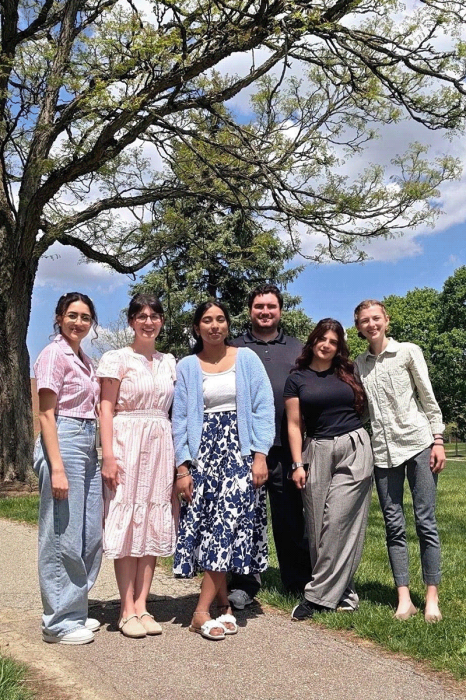
The SPARK peer educators work to create a healthier campus community while gaining hands-on experience to prepare for their future careers.
Currently, six students serve as SPARK peer educators, representing a variety of academic disciplines and educational levels, from undergraduate and graduate programs in psychology, public health and related fields.
Firdous wanted to take advantage of the opportunity to combine her interests in healthcare, communication and student engagement to help build a program that supports the campus community.
“I joined SPARK because I wanted to help create a campus environment where wellness feels like a normal part of student life,” she said. “As a student, I have seen how academic responsibilities, transitions and everyday stressors can impact students, and I wanted to be a part of making wellness conversations more visible and approachable.”
Together, the peer educators work to create a healthier campus community by designing and leading wellness initiatives, hosting and evaluating educational programs, developing health communication materials and helping connect students with university support services.
Baker says she has already seen the peer educators grow as a team and take ownership of the program, shaping the way it operates. They will begin their signature programs this fall.
The program is also helping prepare peer educators for their future careers by providing hands-on experience in leadership, public speaking, health promotion, program planning, data analysis, community engagement and professional development opportunities.
“By this time next year, along with strengthening my own leadership and communication skills, I hope to have made a meaningful contribution to the campus community by helping students feel supported and empowered to prioritize their well-being and succeed both academically and personally,” said Mona Karimzadeh, a third-year doctoral student in the clinical psychology program.
As the program grows, Counseling and Wellness Services hopes that SPARK will continue fostering a campus culture centered on connection, education and support.
“Long-term, we are looking to be a sustainable model for peer education, where peer educators can deliver evidence-based education on health topics most relevant to college students through outreach, workshops and events,” Baker said. “I want the peer educators to be a recognizable resource across campus.”
 Lake Campus expands recreation and engagement opportunities on campus
  Dream, innovate and soar
  Make the argument that changes you
  Wright State brings campus community together to celebrate mental health and well-being
  Wright State trustees approve new academic programs, highlight student success and new research partnerships